mscrm-addons.com logomscrm-addons.com logo
  • Release History
  • Knowledge Base
  • Documentation
  • Contact Support
  • Release History
  • Knowledge Base
  • Documentation
  • Contact Support
home/Knowledge Base/DocumentsCorePack(DCP)/Enable logging for the AutoMergeAzure Plugin for Dynamics 365 Online

Enable logging for the AutoMergeAzure Plugin for Dynamics 365 Online

23 views 0

This blog article describes how you can activate debug logging for the AutoMergeAzure Plugin.  Activating logging can be useful for generating log files for our support team to review if you encounter issues while using the DocumentsCorePack Dialog or Template Designer Office Add-In. 

Note: The AutoMergeAzure Plugin is relevant only for Dataverse (Dynamics 365 Online) organizations with a DCP Online Service created at mscrm-addons.com. 

Step 1: Double-check if logs are already accessible 

Depending on your environment settings, logging may already be enabled.  In these cases, you can already recreate the issue and locate the log files under Power Platform Environment Settings -> Customization -> Plug-In Trace Log.  Skip to “Step 4: Locate log files” for more information.  

Checking the plug-in trace logs
Figure 1: Checking the plug-in trace logs

If the Plug-In Trace Log table is empty, however, you must proceed with the full walkthrough below. 

Step 2: Enable logging to plug-in trace log 

To enable logging, you first must enable tracing for your organization.  This can be done in Dynamics 365 by navigating to Power Platform Environment Settings -> System -> Administration -> Customization. 
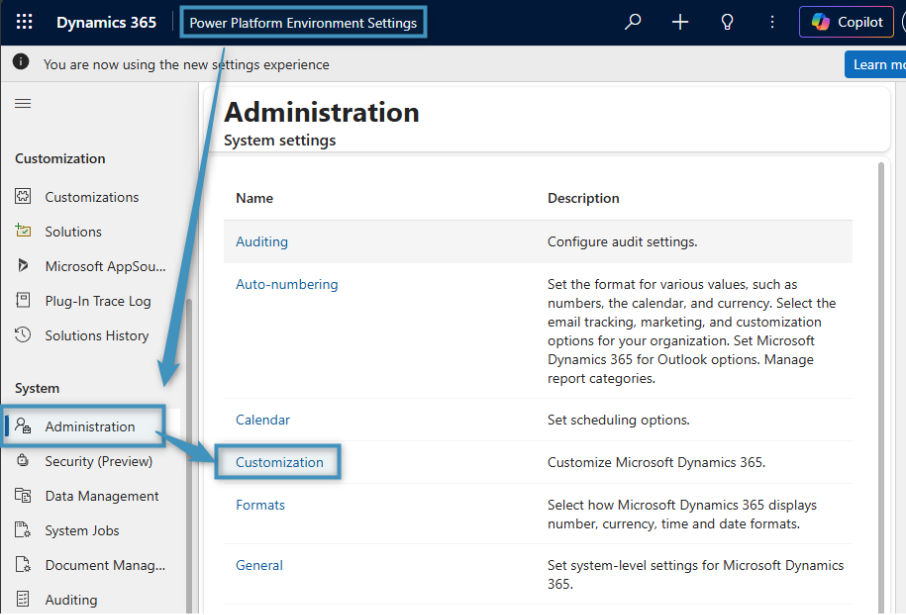
Accessing the customization settings
Figure 2: Accessing the customization settings

Then, under Plug-in and custom workflow activity tracing, select All. 
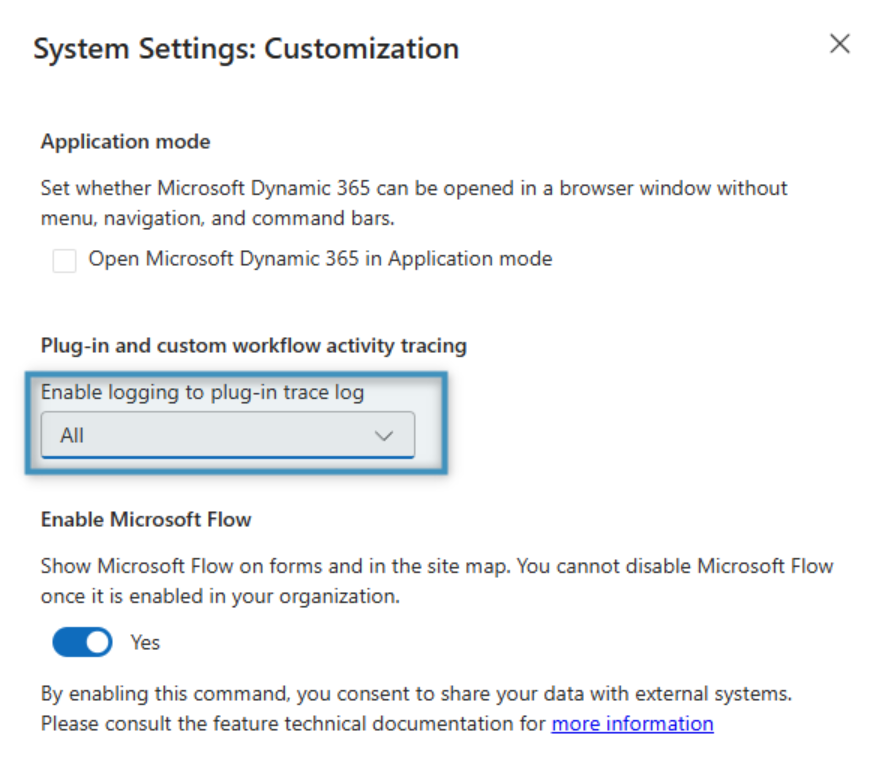
Enable logging
Figure 3: Enable logging

Step 3: Creating and configuring the “Plugin” record 

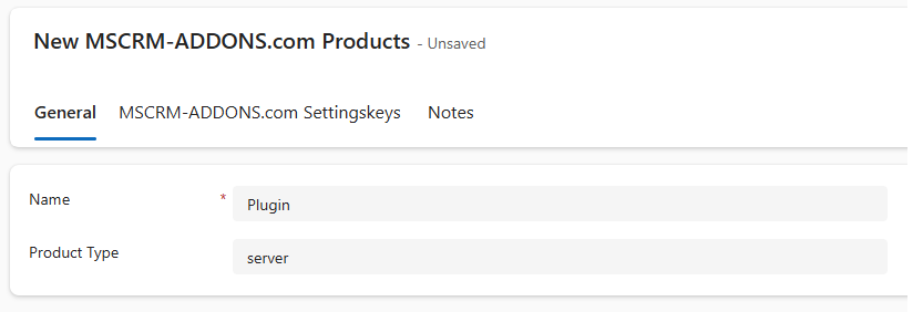
With plug-in tracing activated, return to Power Platform Environment Settings and navigate to MSCRM-ADDONS -> Products.  Check if a record named “Plugin” already exists.  If not, create a new one by clicking the New button.  
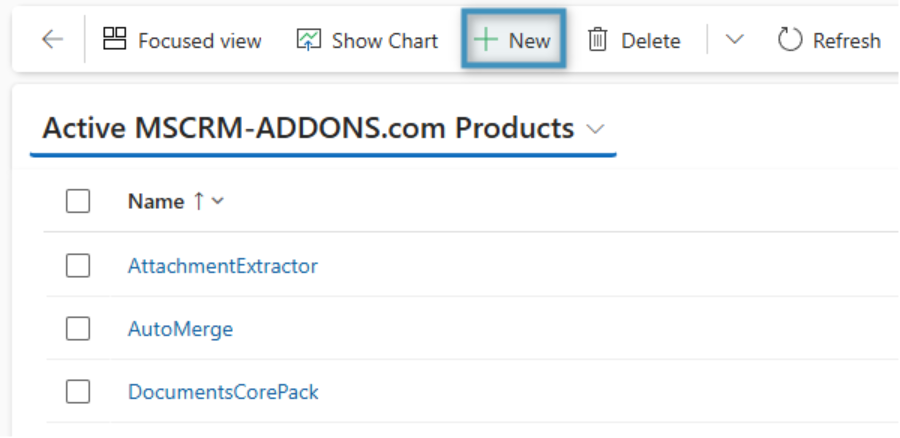
Creating a new "Plugin" record
Figure 4: Creating a new “Plugin” record

Enter the following values into the record: 

  • Name: Plugin 
  • Product Type: server 
Configuring the record
Figure 5: Configuring the record

Save and close the record, then open it again.  Under the MSCRM-ADDONS.com Settingskeys tab, click the New… button to create a new Settingskey. 
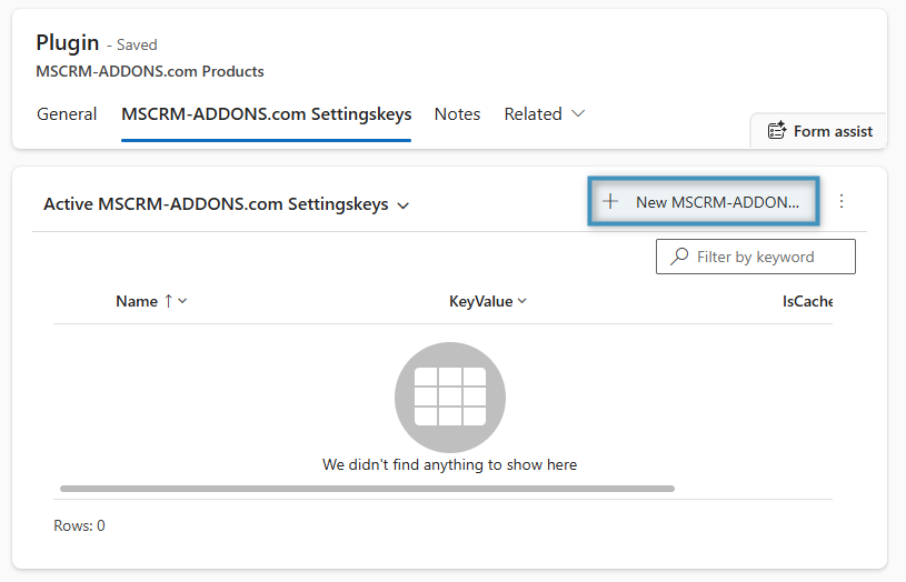
Creating a Settingskey
Figure 6: Creating a Settingskey

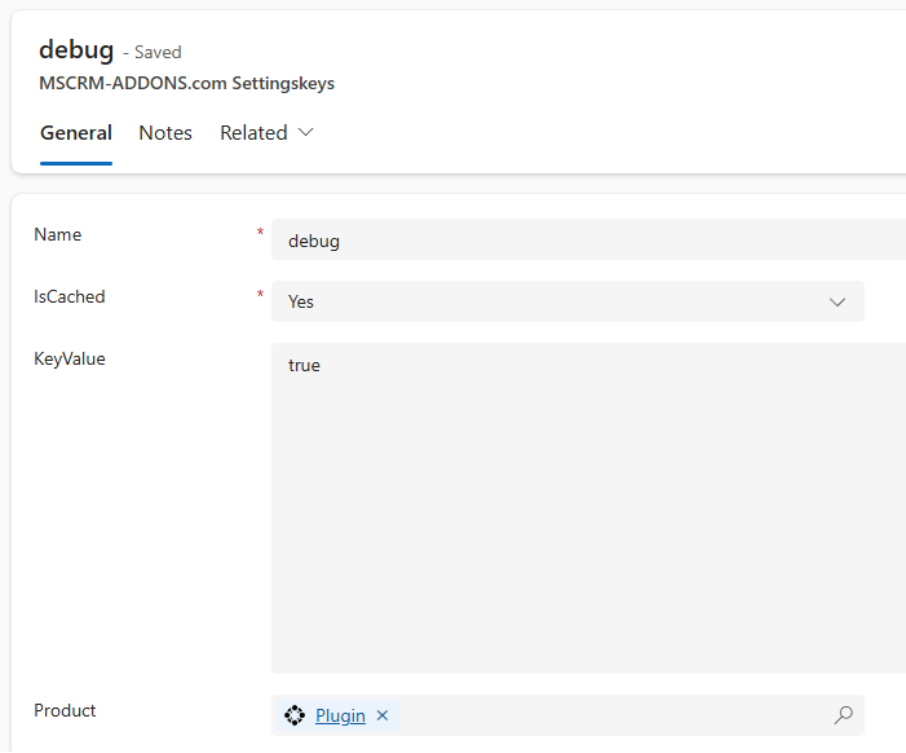
Enter the following information: 

  • Name: debug 
  • Keyvalue: true 
Creating the debug Settingskey
Figure 7: Creating the debug Settingskey

Save and close the Settingskey.  This will active plugin logging. 

Step 4: Locate log files 

To generate log files, please attempt to recreate your issue via the DCP Dialog or DCP Template Designer Office Add-In.  You can then access these log files by returning to Power Platform Environment Settings and navigating to Customization -> Plug-In Trace Log.  Under Type Name, look for records starting with “PTM.Plugins.AutoMergeAzurePlugin”. 

Checking the plug-in trace logs
Figure 8: Checking the plug-in trace logs

The log files can be found under the Execution tab in the Message Block field.  Please send the support team (support@mscrm-addons.com) the content of this field. 
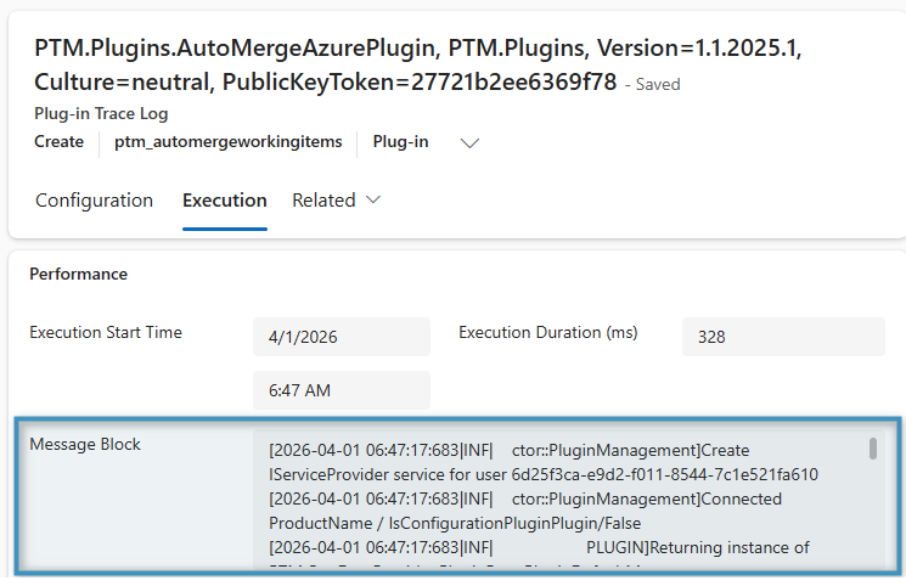
The log files in the Message Block field
Figure 9: The log files in the Message Block field

Note: If the Message Block field is empty, this may mean that an error occurred.  Please look at the Exception Details field below it for more detailed error information. 

Step 5: Disabling logging 

Once the issue is resolved, we recommend disabling logging via the Settingskey again.  If desired, you may also set the Enable logging to plug-in trace log setting in Step 2 back to its original value. 

Was this helpful?

Yes  No
Related Articles
  • Can DocumentsCorePack automate documents directly inside Dynamics 365 at scale?
  • What are the safest and fastest ways to automate document creation in Dynamics 365?
  • Why do document errors and inconsistencies increase as teams scale in Dynamics 365?
  • “Recipients not found” warning when using One-Click-Action
  • What makes a Dynamics 365 add-on easy for partners to recommend in every deal 
  • Enhancing data security for DCP and AE using a virtual network
Latest Articles
  • Enable logging for the AutoMergeAzure Plugin for Dynamics 365 Online
  • Why Microsoft partners standardize on a single Dynamics 365 storage solution
  • Can DocumentsCorePack automate documents directly inside Dynamics 365 at scale?
  • Recap: Directions North America 2026
  • Why does Dynamics 365 storage usage grow so fast after go-live? 
Popular Articles
  • DocumentsCorePack Template Designer – Getting Started
  • Step-by-Step: How to configure a One-Click-Action
  • Application Access for Dynamics 365
  • How licenses are counted
  • How to find your environment’s unique name in Microsoft Dynamics 365
Top Rated Articles
  • “Undefined”-labels in Chrome and Edge 114 and higher
  • How to insert Condition Fields in DocumentsCorePack Templates designer
  • Important information for Dynamics 365 online customers using DocumentsCorePack and/or AttachmentExtractor
  • How to activate the DocumentsCorePack Connector for PowerApps & Microsoft Flow
  • How licenses are counted
Categories
  • *News and General Infos* 76
  • Webinars 48
  • Template Designer(DCP 197
  • DocumentsCorePack(DCP 271
  • TelephoneIntegration (TI 65
  • AttachmentExtractor (AE 80
  • PowerSearch (PS 50
  • ActivityTools (AT 61
  • SmartBar (SB 54
  • GroupCalendar (GC 47
Our Vision

“We see it as our purpose to provide products that simplify and speed up our customers’ Microsoft Dynamics 365 experience.”

Knowledgebase
LogIn
mscrm-addons.com
  • Products
  • Online Shop
  • Downloads
  • My Account
About Us
  • About Us
  • Case Studies
  • Newsletter
  • Partner Program
  • Contact
Support
  • Support
  • Terms & Conditions
  • Documentation
  • Webinars
  • Legal Documents
  • Impressum
  • Cookies
  • © 2025 www.mscrm-addons.com. All Rights Reserved.